

The Riviera Maya is famous for its turquoise Caribbean waters, white-sand beaches, and ancient Maya heritage. But beneath the surface of the Yucatán Peninsula lies another world: a vast network of freshwater pools, limestone caves, and underground rivers known as cenotes.
Exploring a cenote is one of the most memorable experiences you can have in this part of Mexico. Some are open to the sky, surrounded by lush tropical vegetation. Others are hidden inside caves, where sunlight filters through rock openings and illuminates crystal-clear water. Each cenote has its own atmosphere, geological history, and natural character.
Whether you’re visiting Tulum for the first time or looking to discover places beyond the usual tourist stops, understanding the different types of cenotes will help you choose an experience that truly suits you.
What Is a Cenote?
A cenote is a natural freshwater formation created when water interacts with the limestone bedrock of the Yucatán Peninsula. Over thousands of years, slightly acidic rainwater dissolves the limestone, gradually forming cracks, cavities, caves, and underground passages.
When the roof of an underground cavity collapses or becomes exposed, a cenote may emerge. These formations are part of a much larger underground drainage system that connects groundwater, caves, and, in some areas, underground rivers.
Cenotes are also closely connected to the region’s cultural heritage. For the ancient Maya, they were important sources of freshwater and held profound spiritual significance. Today, they remain valuable natural environments and extraordinary places to swim, snorkel, and explore.
Open Cenotes vs. Cave Cenotes: What’s the Difference?
One of the first things to consider when choosing a cenote experience is the type of environment you want to discover. Although cenotes share a geological origin, their appearance and atmosphere can be remarkably different.
Open Cenotes
Open cenotes have exposed water surfaces surrounded by vegetation, rock formations, or natural limestone walls. Some resemble peaceful freshwater lagoons, while others are deep pools shaded by jungle canopies.
Because they receive more direct sunlight, open cenotes often support abundant aquatic vegetation and offer excellent visibility into their underwater landscapes. They are wonderful for swimming, relaxing, snorkeling, and enjoying the surrounding tropical scenery.
If you love natural light, lush greenery, and the feeling of being immersed in the jungle, an open cenote may be the perfect place to begin.
Cave and Semi-Open Cenotes
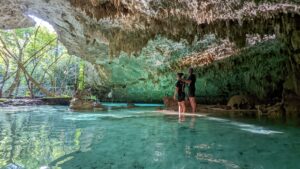
Cave cenotes are partially or almost entirely enclosed by limestone rock. Their interiors can feature stalactites, stalagmites, dramatic rock formations, and passages shaped by water over thousands of years.
Semi-open cenotes have sections of exposed sky alongside shaded or enclosed areas, creating a fascinating contrast between light and darkness.
Inside these environments, the atmosphere changes completely. Sunbeams may enter through small openings, illuminating the water in shades of blue and turquoise. Snorkeling can reveal submerged rock formations and the intricate structure of the cave, where conditions and visibility vary from one location to another.
Cave cenotes are especially appealing to travelers who want to experience the geological side of the Yucatán Peninsula and discover a quieter, more mysterious environment.
Which is better, an open or a cave cenote? Neither is universally better. Open cenotes are ideal for enjoying sunlight, vegetation, and spacious swimming areas, while cave cenotes offer a more enclosed and atmospheric setting. Visiting both is an excellent way to appreciate the region’s diversity.
Natural Cenotes vs. Human-Made Swimming Pools
Not every swimming spot marketed as a cenote offers the same kind of experience. Understanding the difference between a naturally formed cenote and a human-made swimming pool can help you choose a place that matches your expectations.
Natural Cenotes
Natural cenotes are geological formations created by the interaction of water and limestone over long periods. Their shapes, depths, rock walls, and connections to groundwater are products of natural processes rather than architectural design.
They can provide habitat for aquatic organisms and interact with the surrounding forest, soil, and underground water systems. Depending on the location, they may support fish, aquatic plants, microorganisms, and other species adapted to freshwater or subterranean environments.
Because cenotes are connected to a vulnerable groundwater system, responsible tourism matters. Sunscreen, insect repellents, litter, wastewater, and other contaminants can affect water quality. Visitors should follow local rules, avoid touching fragile formations, and use only products permitted by the site.
Human-Made Pools and Modified Cenotes
Some recreational swimming areas are constructed by people, while other sites combine a natural cenote with built platforms, stairs, paths, lighting, or other visitor facilities.
A human-made pool is not a natural cenote simply because it contains clear water or is located in the jungle. A modified natural cenote, however, can still be a genuine cenote even when infrastructure has been added for visitors.
These distinctions matter because construction and tourism development can change drainage patterns, disturb vegetation, increase waste, and place pressure on sensitive environments if they are poorly managed. The effects depend on the scale of development, the design of the facilities, wastewater management, visitor numbers, and the site’s geological characteristics.
Well-designed facilities can improve access and safety while helping manage visitor flow. The goal should be to make these remarkable places accessible without compromising the ecosystems that make them special.
When choosing a cenote, look beyond appearances. Consider whether the experience allows you to appreciate the natural environment, whether visitor rules are respected, and whether the site demonstrates responsible management.
Why Explore Cenotes on a Private, Customized Tour?
The Riviera Maya offers many cenote experiences, but visiting them independently or joining a large group is not the only way to explore. A private cenote tour gives you the flexibility to discover the region at your own pace, with an experience shaped around your interests.
Discover More Than One Type of Cenote
Why settle for a single landscape when you can experience several? A thoughtfully planned private tour can combine an open cenote, a cave cenote, and other freshwater environments, allowing you to see how different these places can be.
Each stop reveals another side of the Yucatán’s underground world, from sunlit jungle pools to limestone chambers hidden beneath the surface.
Explore at Your Own Pace
Some travelers want plenty of time to swim and relax. Others prefer snorkeling, learning about geology, photographing rock formations, or discovering quieter locations.
With a private experience, the itinerary and pace can be adapted to your group’s interests, subject to site regulations, travel times, and availability. You can spend more time at the places you love rather than following the fixed schedule of a large group.
Enjoy a More Personal Experience
A private guide can help you understand how cenotes formed, why their water is so important, and how they connect to the region’s natural and cultural history.
Instead of simply moving from one swimming spot to another, you gain a deeper appreciation of the landscape around you. You can ask questions, learn along the way, and focus on the details that interest you most.
Discover Places Beyond the Crowds
Some of the most rewarding experiences come from visiting locations that are less familiar to first-time travelers. Depending on conditions and access, a private itinerary may include quieter cenotes or places away from the busiest visitor routes.
A knowledgeable local guide can help you choose locations that suit your interests while respecting local communities, conservation requirements, and access rules.
A Better Fit for Your Group
Traveling as a couple, with friends, or with family? A customized tour can take your group’s preferences into account, including swimming confidence, interests, and preferred pace. For families, the suitability of each cenote should be assessed individually, with attention to depth, access, safety rules, and available flotation equipment.
Private transportation can also make the day more comfortable by reducing the need to coordinate separate transfers between locations.
How to Choose the Right Cenote Experience
Before booking, consider a few practical questions:
What kind of scenery do you prefer? Open water and jungle vegetation, enclosed caves, or a combination of both?
Would you like to snorkel? Ask about underwater visibility, permitted activities, and whether equipment is provided.
Are you comfortable swimming? Water depth and access vary. Check whether life jackets are available and whether the location is suitable for your ability.
Are you traveling with children? Choose locations according to each child’s swimming ability, comfort in the water, and the site’s safety requirements.
Do you prefer a relaxed or adventurous day? A private itinerary can often be adjusted to balance swimming, exploration, and time to enjoy the surroundings.
How important is transportation? Confirm whether pickup, transfers between cenotes, entrance fees, equipment, and a private guide are included in the price.
A little planning can make the difference between a quick stop and a memorable day exploring the natural world of the Yucatán.
Explore the Cenotes of Riviera Maya with Tulum Underground
The cenotes of the Yucatán Peninsula are more than beautiful places to swim. They are windows into an ancient geological landscape, delicate freshwater environments, and an important part of the region’s natural and cultural heritage.
With a private, customized cenote tour, you can explore different environments, discover the stories behind the landscape, and enjoy the experience at a pace that feels right for you.
Whether you’re drawn to open-air pools surrounded by jungle, mysterious cave cenotes, or the possibility of discovering several different locations in one day, your experience can be designed around the way you want to explore.
Ready to discover the hidden side of the Riviera Maya? Explore our private cenote tours with Tulum Underground and start planning your own journey into the Yucatán’s underground world.